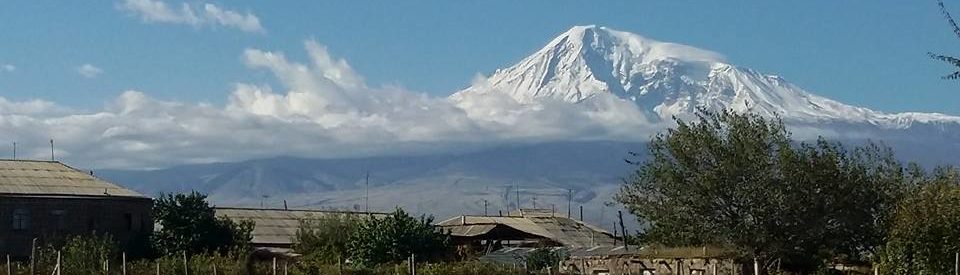

I was reminded once this past week that staying in a particular country or region, even for several years, only gives the illusion of familiarity with the culture and milieu of that location. Journey a short distance, even just a few miles, and one is sometimes confronted with slight, but noticeable, changes in dialect, mannerisms, and culture, even if one is still within the same larger society. The journeys years ago from Yerevan, the bustling capital of Armenia, to Gyumri (formerly Alexandropol and Leninakan) in Shirak Marz and, my recent, almost annual, peregrination to Stepanavan, Lori Marz, have made me aware of the subtle differences that may exist even within the same culture.
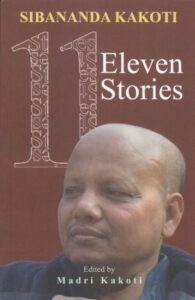
This past week I pleasantly surprised to receive a book of short stories titled Eleven Stories mailed to me by the author of the book himself, Sibananda Kakoti of the State of Assam, in North-Eastern India. I looked forward eagerly to reading the stories and reliving my experiences of living in that State for a total of twelve years or so spread over three decades, the last of which was almost thirty years ago.
Imagine my surprise when I encountered circumstances and situations that I had not personally experienced during my stay in that State. The reason for this was straightforward. Kakoti’s stories were of the rural areas, and my experience was limited solely to the urban and semi-urban areas. The larger umbrellas of language, culture and customs were the same, but rural life was markedly different. The skilled pen of the award-winning writer has captured nuances and subtleties that I was unaware of in spite of the not-so-brief time that I had been fortunate to spend in that state.
It takes much sensitivity and dexterity to achieve this and the acclaimed, and justly so, author achieves this with seeming ease. At the end of every story, I felt a pang of nostalgia, a feeling of empathy, and a feeling of oneness with the characters of the story. This is no mean task when narrating a story that is embedded in a particular society. The pathos of some of the stories made me spend some time in quiet contemplation after reaching the end of the story.
Short stories with surprise or unexpected endings have been popular since the time of O. Henry. (Kakoti, like O. Henry once worked in a bank and, to confess, so did I.) The endings of Kakoti’s stories are not always predictable. But when the conclusion is reached, everything falls into place and makes perfect sense. Prime examples are The Market (Bazaar) or The Horn of Plenty (Xoxaagora). Nothing is contrived or far-fetched. Everything adds up. The preceding narrative justifies the ending.
As mentioned earlier, reading this book helped me understand rural life in Assam better than the time I had physically spent in urban locations of that state. However, there are several things that I still did not understand after I finished reading the book – mostly words. On starting the book, on the very first page, there was a footnote explaining the Assamese term for grandmother (“Aita”). My expectations rose on seeing that but, alas, that was not to be. There are in total only twenty-six such footnotes in the entire book that needs at least four times as many (a conservative estimate). Words like Babaji, Pitai, domboru, namghar (spelt differently elsewhere), dhuni, kirtan, etc. goes by like English words without even italicization.
Part of the reason for this, I’m guessing here, is that the eleven stories in the book have been translated by eight different translators from the original Assamese into English, and as can only be expected, the translating styles and capabilities vary. A suggestion would be to conduct an editor’s review of all the stories to improve the translations and to include footnotes for every non-English word so that the book can be fully enjoyed not only by those familiar with Assam, but by readers from all over the world. An e-book version (Amazon Kindle or any other) with these edits would, I am sure, be greatly appreciated by readers.
My warmest congratulations to the author Sibananda Kakoti for penning these stories in the Assamese language and for taking the step to have them translated into English.