

Surpassing The Gift of the Magi
One of the sights that puzzles and saddens me post-Christmas is that of presents, some of them still unopened, being unceremoniously dumped into donation bins placed at the doors of thrift shops. For someone who values presents given by friends and family, that is almost sacrilege. I even wonder if this action does not add to the post-holiday blues of such discarders.
As for me, I am extremely selective in my gift-giving, choosing both the recipient and the gift very carefully. I do not hand out mandatory Christmas presents to all and sundry. To me, giving a small gift to someone, like the janitor, an attendant, or the cleaning lady, who almost certainly will not requite the favor, is far more meaningful than a de rigueur present to a colleague or friend.
As a personal rule, I do not re-gift or discard presents or gifts I receive, however unnecessary the gift might be, for the simple reason that I’d like to believe that the person who gave me the gift spent not only money and effort on the gift but also spent time in choosing it. The mild clutter that this may cause in my home is more bearable than the guilt that would ensue from disrespecting the giver by throwing away the gift.
A story that stuck to my heart since first reading it in my teens is ‘The Gift of the Magi’ by O. Henry. It is the story of a hard-up husband and wife who, secretly and unbeknownst to each other, sell their prized personal possessions to find the money for buying a special gift for the other, only to discover that the utility of their gifts was linked to the items that the other had sold. The poignancy of the story has not abated with the passage of time or subsequent readings of the story. I have idly wondered if William Sydney Porter had not committed the indiscretion as a bank employee, for which he was incarcerated, he would have penned such exquisite short stories under the pseudonym of O. Henry.
Be that as it may, O. Henry’s story of sacrificial gift-giving came alive a few days ago in a most unexpected manner. I am now on a short visit to my family in the hill-town of Shillong in the Khasi Hills of North-East India, something I do at least once every year, and in recent years, twice a year. A few days ago, a small package was delivered for me when I was not at home. When my family told me who the gift giver was, I was stunned. It was the lady, euphemistically referred to as the “helper”, from the next house.
Over the years our paths would occasionally cross on the road or on my rare visits to the neighbor, when she would be the one bringing in the tea. Indu, for that is her name, had come two decades or so ago to the neighbor’s house as a young girl from a different tribe and a different language several hundred miles away in the plains of Assam and had stayed on through marriage and bearing a daughter.
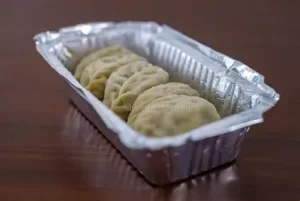 The gift she had brought for me turned out to be a food container of delicious, steamed dumplings, popularly known as momo in this area, and also in Nepal and Bhutan. It is not my style to assess the cost of gifts I receive, but I could not help but reflect on what a significant sacrifice it must have been for her, living on a puny allowance, without health insurance or social security. And I learned when I went over to thank her for her gift, that she had cooked them herself. I was touched to the core. In a world full of violence, destruction, and hate, Indu’s gesture overwhelmed me. I still cannot fathom that a transient visitor like me deserved such a sincere and sacrificial gift. My token presents pale into insignificance.
My faith in humanity has been restored and affirmed. Thank you, Indu, for your generosity.